Types of Scaffolding on Rent for Modern Construction
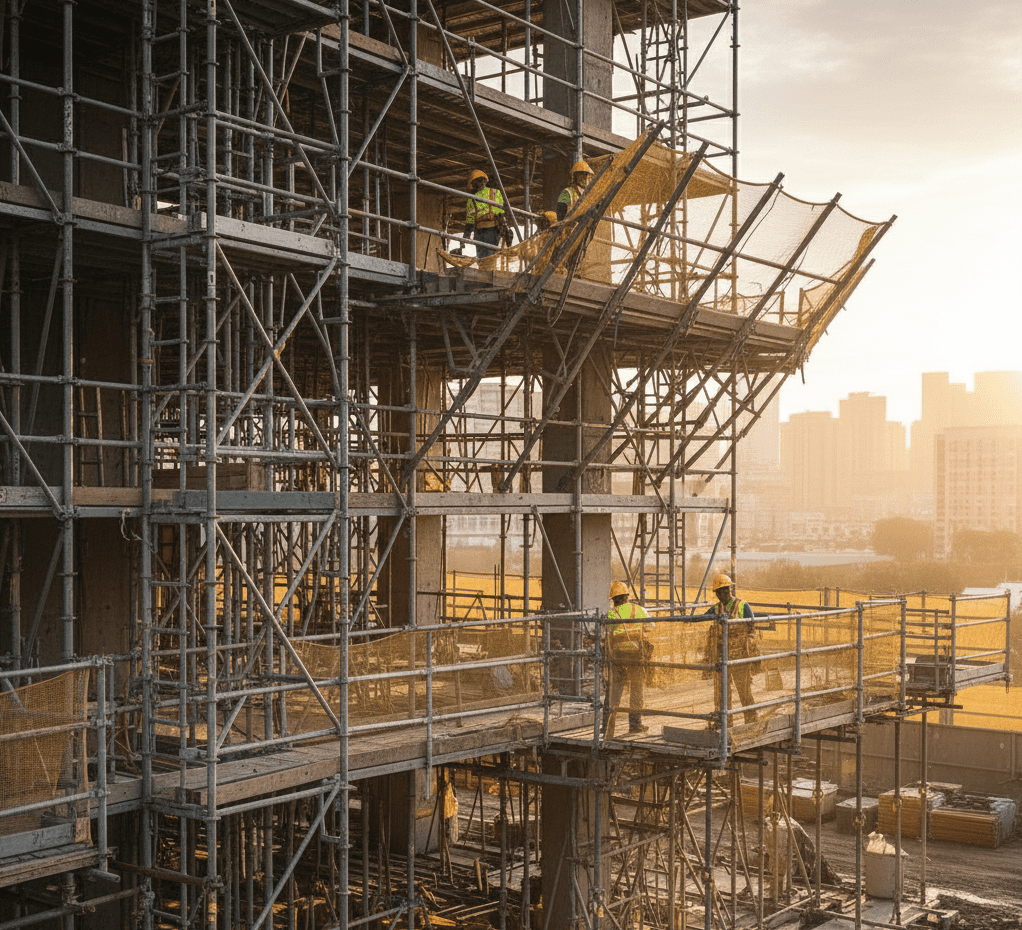
Scaffolding is an essential part that ensures the safety and effectiveness of building access while protecting building workers operating at heights. There are many different types of scaffolding, and scaffolding exists at both small residental buildings or large commercial buildings. Regardless of the building size, scaffolding creates a level of stability so that a construction worker can safely complete built tasks from elevated areas in the construction site.
Selecting a scaffolding material for a building project is one of the most critical decisions you can make in any construction project. The type of scaffolding utilize will directly impact the scaffolding system’s load-carrying capacity, strength, durability, cost, and ease of use.
This article will focus on understanding the various types of scaffolding materials that are commonly used as well as what their common characteristics, benefits, and uses are.
Why Are Scaffolding Materials So Important to Construction
Scaffolding materials are structural materials, but they are also important to the following aspects of a construction project:
- Ability to secure construction worker safety while working at heights
- Ability to support heavy material loads and construction equipment loads on scaffolding systems
- Ability to complete construction projects in a timely and efficient manner
- Ability to minimize the chance of accidents and failures
- Flexibility for all kinds of construction projects is another important factor to consider when selecting an appropriate bulwark system.
Potential dangers to workers such as using non-compliant framed scaffolds have increased throughout the years leading to higher than expected project costs and delayed job completion. Protect your company by using the correct material to build your safety barrier.
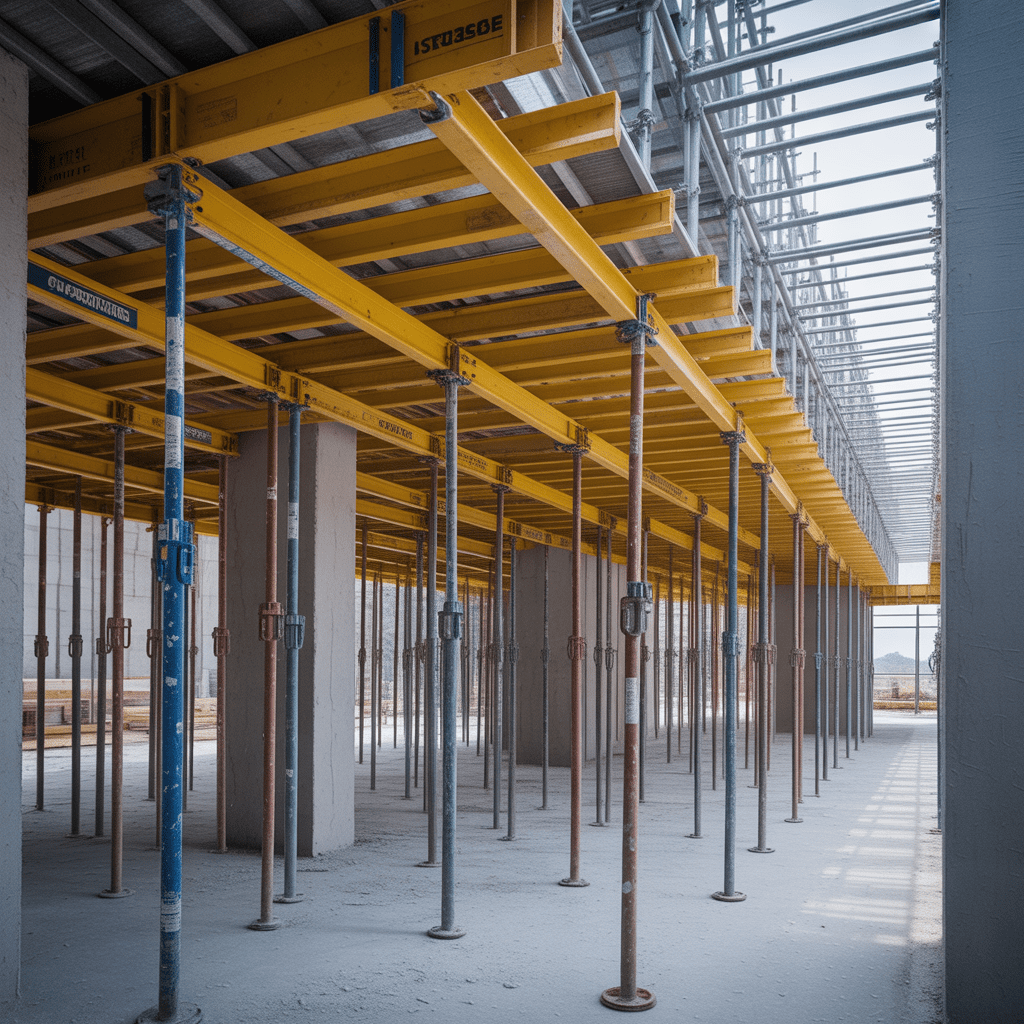
Main Types of Scaffolding Materials
1. Steel Scaffolding (MS Scaffolding)
Steel is the most popular method for scaffolding materials. Its strong structure provides the ability to support massive weight loads while the non-flammability and durability of the product make it suitable for outdoor job sites using excessive amounts of materials.
Key Benefits:
- High strength and durability
- Long life span
- Suitable for high-load construction
- Excellent stability and safety
Where You Will Find It:
- Multi-story buildings
- Industrial construction
- Bridges and structural projects
So when only the highest-level priority is safety and strength, steel scaffolding is the material of choice!
2. Aluminum Scaffolding
Lightweight, portable, and easy to move–these qualities make aluminum scaffolding ideal for rapid, flexible construction.
Reasons to Select Aluminum Scaffolding: Because aluminum is so much easier to transport and assemble than steel will be more cost-effective than using steel because there will be much less labour involved, thus reducing the cost of labour overall.
Key Benefits:
- Lightweight, easily transported
- Corrosion-resistant (does not rust)
- Quick to set up and tear down
- Ideal for indoor maintenance work
Where You Will Find It:
- Painting and maintenance
- Electrical work
- Interiors
So the best material for projects that require speed and mobility is aluminum scaffolding!
3. Bamboo Scaffolding
Many places still use a bamboo scaffolding system as cost prohibits the use of a metal scaffolding system, but local traditions of using bamboo scaffolding are maintained as well in some areas.
Bamboo is naturally strong and flexible, and it is widely available in certain areas.
Key Benefits:
- Cost-effective
- Lightweight
- Environment-friendly
- Easy to assemble with basic tools
Where It Is Used:
- Small construction projects
- Temporary structures
- Rural or low-budget sites
While bamboo is economical, it requires skilled labor and proper tying techniques for safety.
4. Wood Scaffolding:
The traditional form of scaffolding is wooden (timber) scaffolding.
Reasons for Continued Use of Wood as Scaffolding
Wood about the simplest material readily available today is wood; it is also easy to use in small projects.
Advantages of Wooden Scaffolding
- Low-cost
- Easy-to-make cuts
- Good for temporary uses
Where Wooden Scaffolding Is Used
- Small construction projects
- Repair and maintenance of buildings
Wooden scaffolding is not as durable nor as safe as scaffolding made from newer materials such as aluminum or steel.
5. Cuplock Scaffolding System
Cuplock is a modern, technological scaffolding system which is manufactured from steel, and features fast assembly processes and excellent performance capabilities.
What Makes This Product Unique:
Cuplock utilizes a unique locking mechanism called the “cup and blade mechanism” to allow for quick assembly and disassembly without the use of nuts and bolts.
Key Advantages to the Product are:
- Fast assembly and disassembly of scaffolding
- Strong, stable, and durable structure
- Low cost of labor
- High load-bearing capacity
Where This Product is Used:
- Large Construction Sites
- Commercial Buildings
- Industrial Projects
Cuplock Systems are widely utilized due to their time-saving and productivity increasing features.
6. Metal Scaffolding (General Type)
Metal scaffolding refers to both aluminum systems and steel systems (aluminum being the most widely used of the two). Metal scaffolding has emerged as the primary choice among contractors today.
Advantages
- Highly Durable
- Strong and Dependable
- Reusable on Many Projects
- Meets Safety Requirements
Metal scaffolding is often the preferred form of scaffolding due to its ability to provide long-term value and performance.
In the construction business, metal (steel and aluminum) and wood scaffolding are the two main types. Because metal is more resilient, stronger, and better able to support heavier loads than wood, contractors typically favor utilizing it.
You need to take into account a number of things to choose the right materials for your scaffolding.
1. Project Type –
The way you intend to use scaffolding in your construction will greatly contribute to the types of material you choose.
- Large scale projects generally require you to use either steel or cuplock scaffolding.
- Small scale projects generally require you to use either wood or aluminium.
2. Budget Constraints –
- When there are budget constraints you may want to consider using either bamboo
- Wooden scaffolding as opposed to heavier steel scaffolding (which is more expensive).
3. Safety Requirements –
- Will your Scaffolding need to meet higher safety standards?
- If so, then you should consider using either metal or steel scaffolding systems.
4. Work Environment –
- Will the scaffolding be used outdoors in an environment where heavy machinery will be present?
- If so, then steel would be the best choice; On the other hand, if the scaffolding will be used indoors and loaded with lighter types of work, then you would choose an aluminium-based system.
Summary
The building industry relies on scaffolding materials for the safe completion of construction projects. All scaffolding material has a very specific purpose in the construction process. For example, scaffolding made from steel provides an extremely strong base for working from; scaffolding made from aluminium provides a very lightweight solution for erecting a scaffold; and bamboo scaffolding provides the most environmentally friendly solution to building a scaffold type.
Using any type of scaffolding material can increase the safety of your job site and increase the efficiency of your construction project and lower the total amount of money spent on your construction project.
If you are wanting to use scaffolding on your construction project, speak to a scaffolding contractor or a scaffolding rental agency to help you obtain an accurate estimate.