
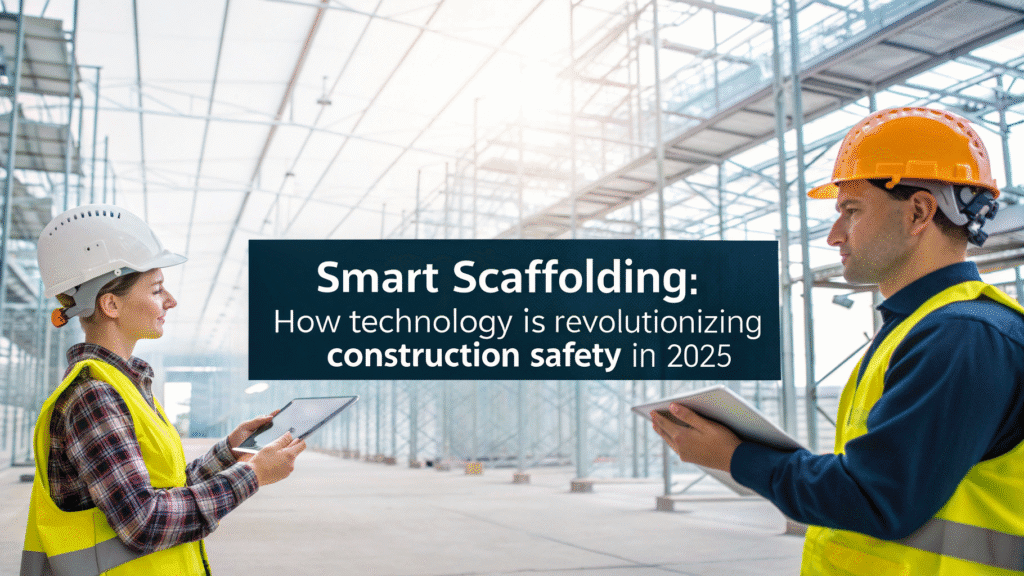
The construction industry is experiencing a digital makeover, and Smart Scaffolding is leading the charge. Gone are the days when scaffolding was just a bunch of metal frames; today’s systems are packed with AI, IoT, automation, and real-time monitoring tools that are changing the game for safety, efficiency, and project management. By 2025, Smart Scaffolding won’t just be enhancing construction sites it will be setting a new global standard for safety technology and operational excellence in the industry. For more insights into the latest advancements in scaffolding technology and safety, visit our detailed article on Latest Scaffolding Trends 2025: Innovation & Safety Updates.
1. Smart Scaffolding and Construction Safety Technology 2025
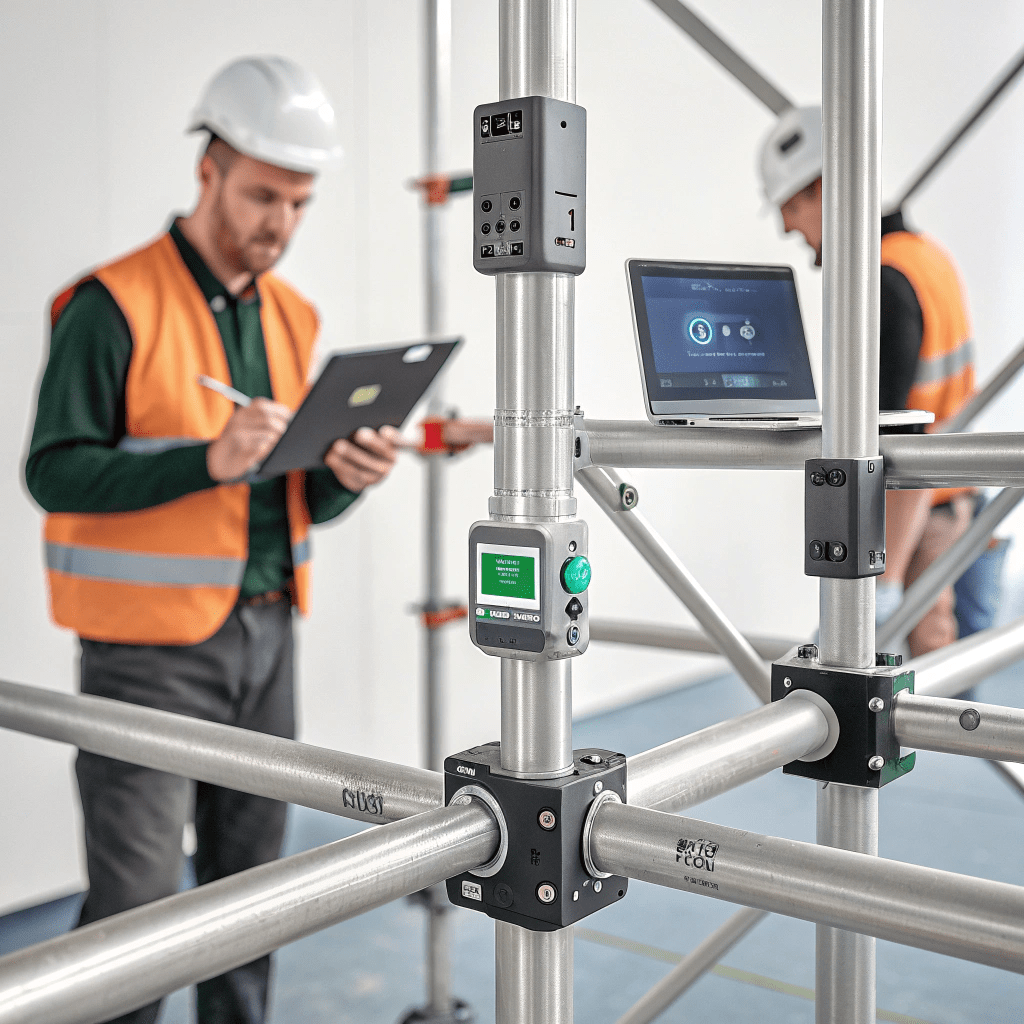
In 2025, Smart Scaffolding will feature sensors, smart locks, and interconnected platforms that continuously monitor structural integrity and load capacity. These advanced systems will instantly alert site managers to potential dangers like overloading, loose joints, or instability. This approach to Construction Safety Technology in 2025 ensures that risks are detected early, significantly cutting down on accidents and human error on-site. Instead of depending solely on manual checks, these data driven systems will protect workers through predictive maintenance and AI-powered alerts.
2. AI and IoT in Scaffolding: Smarter Scaffolding Decisions, Safer Sites
AI and IoT are revolutionizing safety standards in scaffolding. IIoT sensors will collect real-time data from various scaffolding points, while AI algorithms analyze this information to forecast stress points, weather effects, and structural wear. For more details on how AI and IoT are shaping scaffolding systems, explore this comprehensive guide on The Future of Scaffolding: Innovations and Trends in 2025.
3. Smart Construction Solutions and Digital Transformation in Construction
The move towards Smart Construction Solutions is a game-changer in the realm of Digital Transformation in Construction. With cloud-connected scaffolding platforms, teams can monitor and report from afar using mobile apps, which means they can get immediate updates on site safety. Plus, digital blueprints and BIM (Building Information Modeling) integrations enable supervisors to plan scaffolding setups that not only reduce risks but also boost efficiency. This real-time data environment gives decision-makers the power to adapt swiftly, even when dealing with complex multi-story projects.
4. Safety Innovations in Construction: The Automation Advantage
Safety Innovations in Construction are being propelled by Automation in Scaffolding Systems. With automated assembly features and robotic inspections, the risks associated with manual labor are significantly lowered, and precision is enhanced. These systems not only improve consistency and cut down setup time but also eliminate the errors that can happen during manual installation. Automation guarantees that every scaffold section meets international safety standards, which is crucial for achieving zero-accident sites.
5. Future of Construction Safety: Intelligent Scaffolding Systems at Work
The Future of Construction Safety is closely tied to Intelligent Scaffolding Systems. These cutting-edge structures utilize adaptive technologies that learn from site conditions and historical data. For instance, some systems can automatically adjust their configurations to stay balanced during high winds or vibrations. This kind of adaptability turns scaffolding from a mere support tool into an active player in ensuring site safety.
Real-time Monitoring in Construction: Tech-Driven Safety Solutions
When it comes to construction, real-time monitoring brings a level of transparency that’s hard to beat. With Tech-Driven Safety Solutions, supervisors can keep an eye on worker movements, scaffold stability, and environmental conditions as they happen. This ongoing visibility allows teams to spot unsafe trends before they escalate, fostering a proactive approach to safety instead of just reacting to issues. Consequently, Smart Scaffolding not only boosts productivity but also enhances worker confidence.
Conclusion: Building the Future, Safely
Smart Scaffolding is more than just a new idea it’s part of a larger shift towards smarter, safer, and more sustainable construction practices. Thanks to advancements in AI, IoT, automation, and data-driven insights, these systems are changing the game for project management in 2025 and beyond. In a world that’s rapidly embracing digital transformation, Smart Scaffolding stands out as a beacon of progress, ensuring that every structure is built with intelligence, safety, and efficiency at its heart.